
Agentic AI – AI Agents Explained: How They Work, Real Examples, Tools + Future Trends
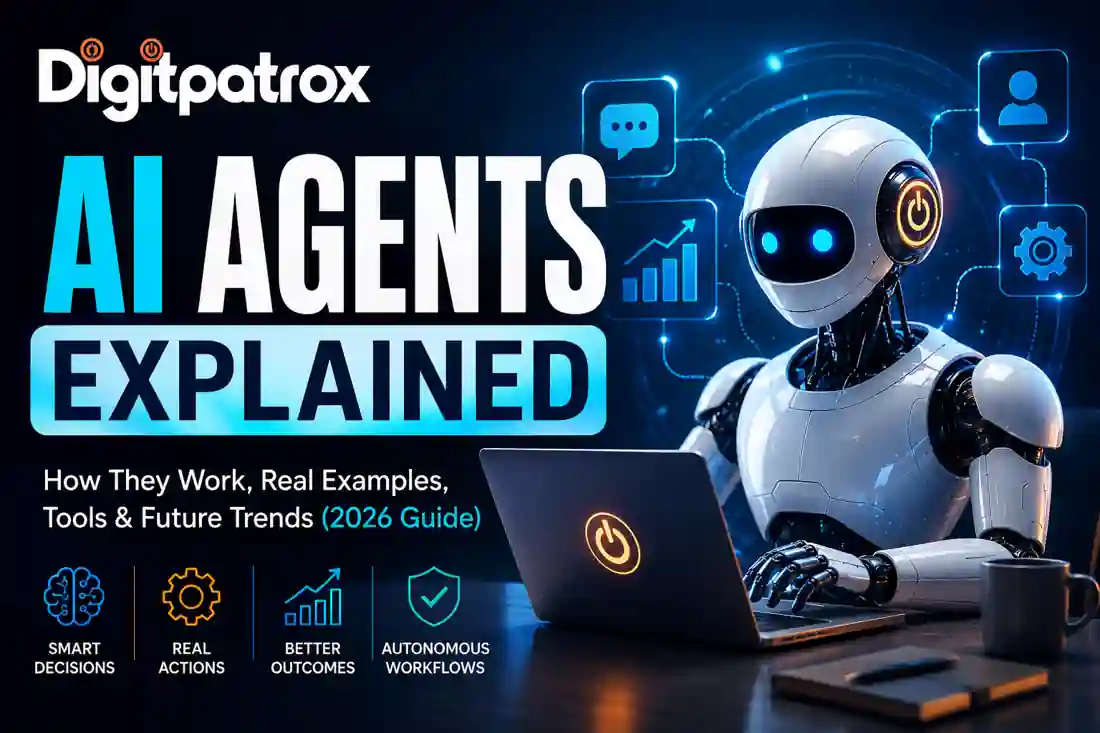
Introduction to Agentic AI
Agentic AI, also known as AI agents, refers to a type of artificial intelligence that enables machines to perform tasks autonomously, making decisions and taking actions based on their environment and goals. These AI agents are designed to perceive their surroundings, reason about the current state, and take actions to achieve their objectives. In this deep dive, we will explore the inner workings of agentic AI, real-world examples, tools, and future trends, focusing on the technical impact and 2026 innovations. As a Senior Technical Analyst at Menshly Tech, I will provide an in-depth analysis of the current state of agentic AI and its potential applications.
How Agentic AI Works
Agentic AI operates on a feedback loop, where the agent perceives its environment, processes the information, and takes actions to achieve its goals. This loop consists of several components, including perception, reasoning, and action. The perception component involves the agent gathering data from its environment through sensors or other means. The reasoning component processes the perceived data, using algorithms and models to make decisions. Finally, the action component executes the decided-upon actions, which can include physical movements, communication, or other interactions with the environment.
The key characteristics of agentic AI include autonomy, reactivity, proactivity, and social ability. Autonomy refers to the agent's ability to operate independently, making decisions without human intervention. Reactivity involves the agent's capacity to respond to changes in its environment. Proactivity enables the agent to take initiative and make decisions based on its goals and objectives. Social ability refers to the agent's capacity to interact with other agents and humans, facilitating cooperation and communication.
Real-World Examples of Agentic AI
Agentic AI has numerous real-world applications, including robotics, smart homes, and autonomous vehicles. For instance, robotic vacuum cleaners use agentic AI to navigate and clean floors, avoiding obstacles and adapting to changing environments. Smart home devices, such as thermostats and lighting systems, employ agentic AI to learn occupants' preferences and adjust settings accordingly. Autonomous vehicles, like self-driving cars, utilize agentic AI to perceive their surroundings, make decisions, and take actions to ensure safe and efficient transportation.
Another example of agentic AI is virtual assistants, such as Amazon's Alexa or Google Assistant. These agents use natural language processing to understand voice commands, reason about the requested actions, and execute tasks, such as playing music or setting reminders. Virtual assistants demonstrate the social ability of agentic AI, interacting with humans and other agents to provide assistance and facilitate tasks.
Tools and Frameworks for Agentic AI
Several tools and frameworks are available for developing and deploying agentic AI. These include programming languages, such as Python and Java, which provide libraries and frameworks for building AI agents. Popular frameworks include TensorFlow and PyTorch, which offer tools for machine learning and deep learning. Other frameworks, such as ROS (Robot Operating System) and OpenCV, provide libraries and tools for computer vision and robotics.
Additionally, cloud-based platforms, such as Amazon Web Services (AWS) and Google Cloud Platform (GCP), offer services and tools for building and deploying agentic AI. These platforms provide pre-built models, APIs, and software development kits (SDKs) for integrating AI agents into various applications. For instance, AWS offers SageMaker, a platform for building, training, and deploying machine learning models, while GCP provides AutoML, a suite of automated machine learning tools.
Future Trends and Innovations in Agentic AI
As we look to the future, several trends and innovations are expected to shape the development and deployment of agentic AI. One key trend is the increasing use of edge computing, which involves processing data closer to the source, reducing latency and improving real-time decision-making. Edge computing will enable agentic AI to operate more efficiently, particularly in applications such as autonomous vehicles and smart homes.
💻 Technical Breakdown Video
Another trend is the growing importance of explainability and transparency in agentic AI. As AI agents become more autonomous and make decisions that impact humans, there is a need to understand and explain their decision-making processes. Techniques, such as model interpretability and explainable AI, will become crucial in developing trustworthy and accountable agentic AI.
In 2026, we can expect significant advancements in agentic AI, driven by innovations in areas like computer vision, natural language processing, and reinforcement learning. For instance, the use of multimodal inputs, such as vision, speech, and text, will enable AI agents to perceive and interact with their environment more effectively. Additionally, the integration of cognitive architectures, such as SOAR and LIDA, will provide AI agents with more human-like reasoning and decision-making capabilities.
Technical Impact of Agentic AI
The technical impact of agentic AI will be significant, transforming various industries and aspects of our lives. In the field of robotics, agentic AI will enable robots to operate more autonomously, performing tasks such as assembly, inspection, and maintenance. In healthcare, agentic AI will facilitate the development of personalized medicine, enabling AI agents to analyze patient data and make tailored recommendations for treatment.
In the realm of cybersecurity, agentic AI will play a crucial role in detecting and responding to threats, using machine learning and anomaly detection to identify potential security breaches. Additionally, agentic AI will transform the customer service industry, enabling chatbots and virtual assistants to provide more personalized and effective support.
However, the technical impact of agentic AI also raises important questions about accountability, responsibility, and ethics. As AI agents become more autonomous, there is a need to establish clear guidelines and regulations for their development and deployment. This includes addressing concerns around bias, fairness, and transparency, ensuring that agentic AI is aligned with human values and promotes social good.
Conclusion
In conclusion, agentic AI represents a significant advancement in the field of artificial intelligence, enabling machines to perform tasks autonomously and make decisions based on their environment and goals. With real-world applications in robotics, smart homes, and autonomous vehicles, agentic AI has the potential to transform various industries and aspects of our lives. As we look to the future, trends and innovations such as edge computing, explainability, and multimodal inputs will shape the development and deployment of agentic AI.
As a Senior Technical Analyst at Menshly Tech, I believe that agentic AI will have a profound technical impact, driving innovation and growth in areas like robotics, healthcare, and cybersecurity. However, it is essential to address the challenges and concerns surrounding agentic AI, ensuring that these AI agents are developed and deployed responsibly, with a focus on transparency, accountability, and social good. By doing so, we can unlock the full potential of agentic AI and create a future where humans and machines collaborate to achieve great things.
About Menshly Tech
Documenting the intersection of human creativity and autonomous systems. Part of the Menshly Digital Media Group.
Follow Author


0 Comments