
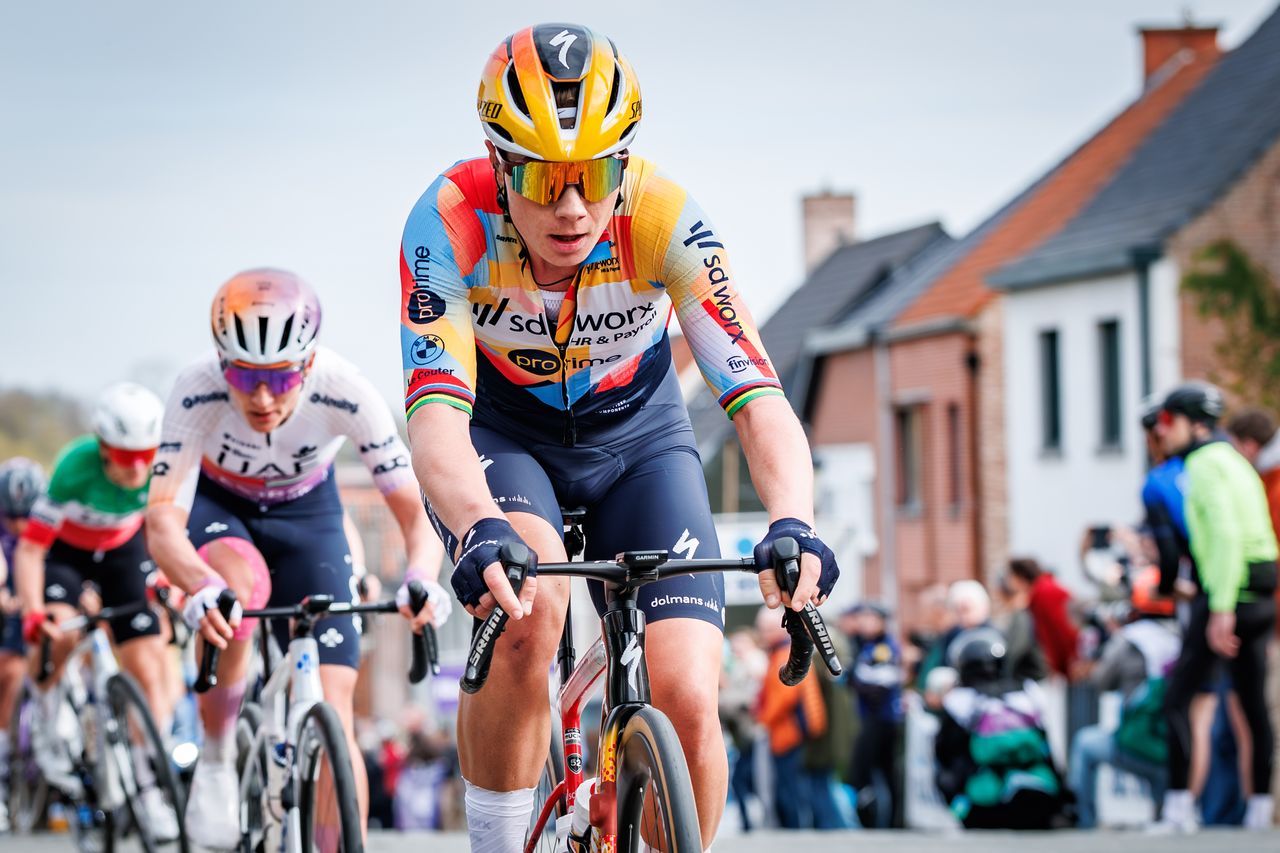
'I'm just at the level I want to be' – Lotte Kopecky says she 'doesn't really care' whether rivals view her as Tour of Flanders frontrunner
Introduction to Lotte Kopecky's Statement
Lotte Kopecky, a renowned cyclist, has recently made a statement that has garnered significant attention in the cycling community. When asked about her status as a frontrunner for the Tour of Flanders, Kopecky nonchalantly replied, "I'm just at the level I want to be" and further added that she "doesn't really care" whether her rivals view her as a top contender. This statement not only showcases Kopecky's confidence and mental toughness but also highlights her focus on self-improvement and personal growth. As a Senior Technical Analyst at Menshly Tech, I will delve into the technical implications of Kopecky's statement and explore how it relates to the latest innovations in the cycling industry, particularly in 2026.
Technical Impact of Kopecky's Statement
Kopecky's statement can be seen as a reflection of her technical approach to cycling. By stating that she is at the level she wants to be, Kopecky implies that she has a deep understanding of her physical and mental capabilities. This self-awareness allows her to optimize her training and racing strategies, focusing on areas that need improvement while maintaining her strengths. From a technical perspective, Kopecky's statement highlights the importance of data analysis and performance monitoring in cycling. With the help of advanced data analytics tools, cyclists like Kopecky can track their progress, identify areas of improvement, and make data-driven decisions to enhance their performance. In 2026, we can expect to see even more advanced data analytics tools, such as artificial intelligence-powered performance tracking and personalized coaching platforms, that will enable cyclists to fine-tune their training and gain a competitive edge.
2026 Innovations in Cycling Technology
The cycling industry is constantly evolving, with new innovations and technologies emerging every year. In 2026, we can expect to see significant advancements in areas such as aerodynamics, materials science, and digital technology. One of the most exciting innovations in 2026 is the development of advanced aerodynamic systems, such as active aerodynamics and shape-memory alloys. These technologies will enable cyclists to optimize their bike's aerodynamic profile in real-time, reducing air resistance and improving overall performance. Additionally, advancements in materials science will lead to the development of lighter, stronger, and more durable materials, allowing cyclists to ride faster and more efficiently. Digital technology will also play a crucial role in 2026, with the integration of augmented reality and virtual reality into cycling training and racing. This will enable cyclists to simulate real-world racing scenarios, analyze their performance, and receive personalized feedback and coaching.
Integration of Technology and Training
Kopecky's statement also highlights the importance of integrating technology and training in cycling. By leveraging advanced data analytics tools and innovative technologies, cyclists can optimize their training and gain a competitive edge. In 2026, we can expect to see even more integration of technology and training, with the development of personalized coaching platforms and artificial intelligence-powered training programs. These platforms will enable cyclists to receive tailored coaching and feedback, based on their individual strengths, weaknesses, and goals. Additionally, the use of virtual and augmented reality will become more prevalent in cycling training, allowing cyclists to simulate real-world racing scenarios and receive immersive feedback and coaching.
Psychological Impact of Kopecky's Statement
Kopecky's statement also has significant psychological implications, particularly in terms of her mental toughness and resilience. By stating that she "doesn't really care" whether her rivals view her as a frontrunner, Kopecky demonstrates a high level of confidence and self-assurance. This mental toughness is critical in cycling, where athletes are often subjected to intense pressure and competition. In 2026, we can expect to see even more emphasis on mental training and psychological preparation in cycling, with the development of advanced mental performance coaching platforms and mindfulness-based training programs. These platforms will enable cyclists to develop the mental toughness and resilience needed to perform at the highest level, even in the face of intense competition and pressure.
💻 Technical Breakdown Video
Conclusion and Future Outlook
In conclusion, Lotte Kopecky's statement highlights the importance of technical awareness, self-improvement, and mental toughness in cycling. As we look to 2026, we can expect to see significant innovations in cycling technology, including advancements in aerodynamics, materials science, and digital technology. The integration of technology and training will become even more critical, with the development of personalized coaching platforms and artificial intelligence-powered training programs. Additionally, the psychological aspect of cycling will become more prominent, with a greater emphasis on mental performance coaching and mindfulness-based training. As a Senior Technical Analyst at Menshly Tech, I am excited to see how these innovations will shape the future of cycling and enable athletes like Kopecky to perform at the highest level.
Future Innovations and Predictions
Looking ahead to 2026 and beyond, we can expect to see even more exciting innovations in the cycling industry. One area that holds significant promise is the development of advanced wearable technology, such as smart clothing and biometric sensors. These technologies will enable cyclists to track their physical and mental state in real-time, providing valuable insights into their performance and allowing for more personalized coaching and training. Additionally, the use of blockchain technology and cryptocurrency will become more prevalent in cycling, enabling secure and transparent transactions, as well as new business models and revenue streams. As the cycling industry continues to evolve, we can expect to see even more innovative technologies and innovations emerge, transforming the sport and enabling athletes like Kopecky to push the boundaries of human performance.
Technical Analysis and Recommendations
From a technical perspective, Kopecky's statement highlights the importance of data-driven decision making in cycling. To optimize their performance, cyclists should leverage advanced data analytics tools and innovative technologies, such as artificial intelligence and machine learning. Additionally, cyclists should focus on developing their mental toughness and resilience, through mindfulness-based training and mental performance coaching. In terms of specific recommendations, cyclists should prioritize the development of a personalized training plan, tailored to their individual strengths, weaknesses, and goals. This plan should incorporate a combination of physical and mental training, as well as regular data analysis and performance monitoring. By following these recommendations, cyclists can optimize their performance, gain a competitive edge, and achieve their goals in the sport.
Conclusion and Final Thoughts
In conclusion, Lotte Kopecky's statement offers valuable insights into the technical and psychological aspects of cycling. As we look to 2026 and beyond, we can expect to see significant innovations in cycling technology, including advancements in aerodynamics, materials science, and digital technology. The integration of technology and training will become even more critical, with the development of personalized coaching platforms and artificial intelligence-powered training programs. As a Senior Technical Analyst at Menshly Tech, I am excited to see how these innovations will shape the future of cycling and enable athletes like Kopecky to perform at the highest level. By leveraging advanced data analytics tools, innovative technologies, and personalized coaching, cyclists can optimize their performance, gain a competitive edge, and achieve their goals in the sport.
About Menshly Tech
Documenting the intersection of human creativity and autonomous systems. Part of the Menshly Digital Media Group.
Follow Author


0 Comments