
AI speeds up insurance claims, personalises premiums and improves fraud detection for customers
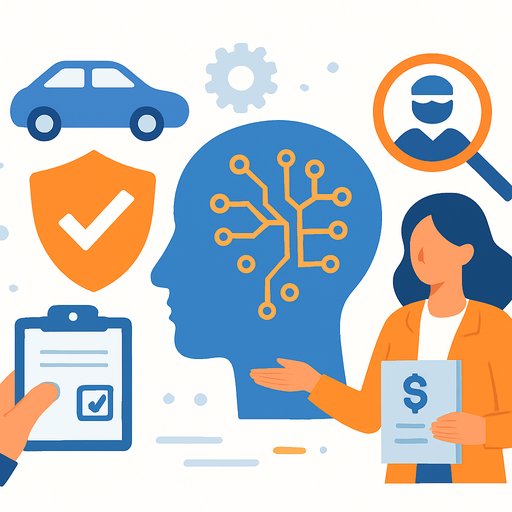
Introduction to AI in Insurance
The insurance industry has undergone significant transformations in recent years, and one of the key drivers of this change is the adoption of Artificial Intelligence (AI). AI has revolutionized the way insurance companies operate, from speeding up claims processing to personalizing premiums and improving fraud detection. As we delve into 2026, it's essential to explore the technical impact of AI on the insurance industry and the innovations that are shaping the future of insurance. At Menshly Tech, we're committed to staying at the forefront of this technological shift, and in this article, we'll examine the ways in which AI is transforming the insurance landscape.
Speeding Up Insurance Claims with AI
One of the most significant advantages of AI in insurance is its ability to accelerate claims processing. Traditional claims processing methods can be time-consuming and labor-intensive, involving manual data entry, paperwork, and communication with policyholders. AI-powered systems can automate many of these tasks, enabling insurance companies to process claims faster and more efficiently. For instance, AI-powered chatbots can help policyholders report claims and provide initial assessments, while machine learning algorithms can analyze data from various sources, such as sensor data, images, and videos, to determine the extent of damage or loss. This enables insurance companies to make more accurate and timely decisions, resulting in faster payouts and improved customer satisfaction. In 2026, we can expect to see even more advanced AI-powered claims processing systems, such as those utilizing computer vision and natural language processing to analyze claims data and make more informed decisions.
Personalizing Premiums with AI
AI is also enabling insurance companies to personalize premiums for their customers. By analyzing vast amounts of data, including demographic information, driving habits, and claims history, AI-powered systems can create highly tailored insurance policies that reflect an individual's specific risk profile. This not only helps to reduce premiums for low-risk policyholders but also enables insurance companies to more accurately assess and manage risk. For example, AI-powered telematics systems can track a driver's behavior, such as their speed, acceleration, and braking habits, to provide a more accurate assessment of their risk profile. In 2026, we can expect to see even more advanced AI-powered personalization, such as the use of predictive analytics to identify potential risks and offer preventive measures to policyholders. This could include personalized recommendations for risk mitigation, such as safety tips or maintenance advice, to help policyholders reduce their risk profile and lower their premiums.
Improving Fraud Detection with AI
Fraud detection is another area where AI is having a significant impact on the insurance industry. AI-powered systems can analyze vast amounts of data, including claims history, policyholder information, and external data sources, to identify potential cases of fraud. Machine learning algorithms can detect patterns and anomalies in the data that may indicate fraudulent activity, enabling insurance companies to take proactive measures to prevent fraud. For instance, AI-powered systems can analyze claims data to identify suspicious patterns, such as multiple claims filed by the same policyholder in a short period. In 2026, we can expect to see even more advanced AI-powered fraud detection systems, such as those utilizing deep learning and neural networks to analyze complex data sets and identify potential cases of fraud. This could include the use of AI-powered chatbots to investigate suspicious claims and gather more information from policyholders.
Technical Impact of AI on Insurance
The technical impact of AI on the insurance industry is significant, and it's essential to understand the underlying technologies that are driving this change. Some of the key technologies include machine learning, natural language processing, computer vision, and predictive analytics. Machine learning algorithms, such as neural networks and decision trees, are being used to analyze vast amounts of data and make predictions about future events. Natural language processing is being used to analyze text-based data, such as policy documents and claims reports, to extract relevant information and identify patterns. Computer vision is being used to analyze images and videos, such as those captured by drones or smartphones, to assess damage or loss. Predictive analytics is being used to forecast future events, such as natural disasters or accidents, to enable insurance companies to take proactive measures to mitigate risk.
💻 Technical Breakdown Video
2026 Innovations in AI-Powered Insurance
As we look to 2026, there are several innovations on the horizon that are set to transform the insurance industry. One of the most significant is the use of edge AI, which enables AI-powered systems to operate at the edge of the network, closer to the source of the data. This reduces latency and enables real-time processing, making it ideal for applications such as telematics and smart home insurance. Another innovation is the use of explainable AI, which provides transparency into the decision-making process of AI-powered systems. This is essential for building trust with policyholders and regulators, who need to understand how AI-powered systems are making decisions. We can also expect to see more widespread adoption of cloud-based AI services, which provide insurance companies with access to scalable and secure AI infrastructure. This will enable them to develop and deploy AI-powered applications more quickly and efficiently, without the need for significant upfront investment.
Conclusion
In conclusion, AI is revolutionizing the insurance industry, from speeding up claims processing to personalizing premiums and improving fraud detection. As we look to 2026, we can expect to see even more advanced AI-powered systems, such as those utilizing edge AI, explainable AI, and cloud-based AI services. At Menshly Tech, we're committed to staying at the forefront of this technological shift, and we're excited to see the impact that AI will have on the insurance industry in the years to come. Whether it's through the use of machine learning, natural language processing, or computer vision, AI is set to transform the insurance industry in ways that we're only just beginning to imagine. As the industry continues to evolve, it's essential to stay informed about the latest developments and innovations, and to be prepared to adapt to the changing landscape. By doing so, insurance companies can unlock the full potential of AI and provide their policyholders with faster, more personalized, and more effective insurance services.
Future Outlook
Looking ahead to the future, it's clear that AI will play an increasingly important role in the insurance industry. As the technology continues to evolve, we can expect to see more advanced AI-powered systems that are capable of analyzing vast amounts of data, making predictions, and taking proactive measures to mitigate risk. One of the key areas of focus will be the development of more sophisticated machine learning algorithms, such as those utilizing deep learning and neural networks. These algorithms will enable insurance companies to analyze complex data sets and make more accurate predictions about future events. Another area of focus will be the development of more transparent and explainable AI systems, which will provide policyholders and regulators with a clearer understanding of how AI-powered decisions are being made. By prioritizing transparency and explainability, insurance companies can build trust with their policyholders and demonstrate the value of AI-powered insurance services.
Technical Challenges and Opportunities
Despite the many benefits of AI in insurance, there are also several technical challenges that need to be addressed. One of the key challenges is the need for high-quality data, which is essential for training and validating AI-powered systems. Insurance companies will need to invest in data management and analytics capabilities to ensure that they have access to accurate and relevant data. Another challenge is the need for advanced computing infrastructure, which is required to support the processing and analysis of large data sets. This may involve investing in cloud-based services, such as Amazon Web Services or Microsoft Azure, or developing on-premises infrastructure using specialized hardware and software. By addressing these technical challenges, insurance companies can unlock the full potential of AI and provide their policyholders with faster, more personalized, and more effective insurance services.
About Menshly Tech
Documenting the intersection of human creativity and autonomous systems. Part of the Menshly Digital Media Group.
Follow Author


0 Comments