
Nvidia bets on AI inference as chip revenue opportunity hits $1 trillion
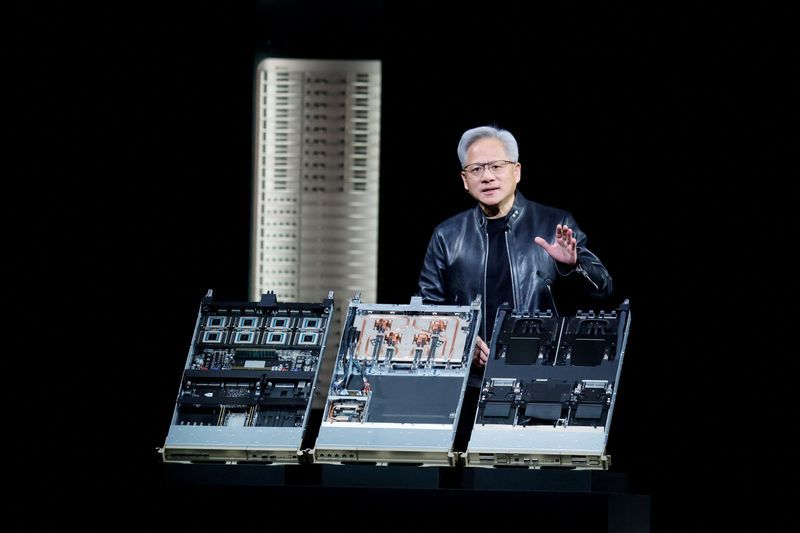
Introduction to Nvidia's AI Inference Strategy
Nvidia, a leader in the field of graphics processing units (GPUs) and high-performance computing, has been at the forefront of the artificial intelligence (AI) revolution. The company has been investing heavily in AI research and development, with a focus on AI inference, which is the process of using trained AI models to make predictions or decisions. Nvidia's bet on AI inference is driven by the massive revenue opportunity it presents, with the global chip revenue from AI inference expected to hit $1 trillion by 2026. In this deep dive, we will explore the technical impact of Nvidia's AI inference strategy and the innovations that the company is expected to introduce in 2026.
Technical Impact of AI Inference
AI inference is a critical component of the AI ecosystem, as it enables the deployment of trained AI models in a wide range of applications, from image and speech recognition to natural language processing and recommender systems. The technical impact of AI inference is significant, as it requires the development of specialized hardware and software that can efficiently process the complex mathematical calculations involved in AI model inference. Nvidia's GPUs, with their massive parallel processing capabilities, are well-suited for AI inference workloads, and the company has been optimizing its GPU architectures to improve inference performance and efficiency.
Nvidia's AI inference strategy is based on its Tensor Core technology, which is a specialized hardware block that is designed to accelerate matrix multiplication, a key operation in deep learning. The Tensor Core technology is integrated into Nvidia's GPUs, including the Ampere and Hopper architectures, which are designed to provide high-performance AI inference capabilities. Nvidia has also developed a range of software tools and frameworks, including the Nvidia TensorRT and Nvidia Deep Learning SDK, to support AI inference on its GPUs. These tools enable developers to optimize and deploy AI models on Nvidia's GPUs, and to integrate AI inference into their applications.
Nvidia's AI Inference Revenue Opportunity
The revenue opportunity from AI inference is massive, with the global chip revenue from AI inference expected to hit $1 trillion by 2026. This represents a significant growth opportunity for Nvidia, which is well-positioned to capitalize on the trend. Nvidia's AI inference revenue is expected to come from a range of sources, including the sale of GPUs and other hardware optimized for AI inference, as well as the licensing of its AI inference software and intellectual property. The company is also expected to generate revenue from its datacenter business, which provides cloud-based AI inference services to customers.
Nvidia's AI inference revenue opportunity is driven by the growing demand for AI-powered applications and services. The use of AI is becoming increasingly widespread, with applications in areas such as computer vision, natural language processing, and recommender systems. The growth of the Internet of Things (IoT) and the increasing use of edge devices are also driving the demand for AI inference, as these devices require the ability to process and analyze data in real-time. Nvidia is well-positioned to capitalize on this trend, with its GPUs and AI inference software providing the high-performance processing capabilities required for AI-powered applications.
💻 Technical Breakdown Video
2026 Innovations: Hopper Architecture and Beyond
In 2026, Nvidia is expected to introduce a range of innovations that will further enhance its AI inference capabilities. One of the key innovations is the Hopper architecture, which is Nvidia's next-generation GPU architecture. The Hopper architecture is designed to provide significant improvements in AI inference performance and efficiency, with a focus on matrix multiplication and other key operations in deep learning. The Hopper architecture is also expected to include a range of new features, such as improved tensor processing and enhanced support for AI inference workloads.
Another innovation that Nvidia is expected to introduce in 2026 is its next-generation Tensor Core technology. The Tensor Core technology is a critical component of Nvidia's AI inference strategy, and the company is expected to introduce significant improvements in the next generation. The new Tensor Core technology is expected to provide higher performance and efficiency, as well as improved support for emerging AI workloads such as transformers and graph neural networks. Nvidia is also expected to introduce new software tools and frameworks to support its AI inference capabilities, including improved versions of its TensorRT and Deep Learning SDK.
Conclusion: Nvidia's AI Inference Strategy
In conclusion, Nvidia's bet on AI inference is a strategic move that is driven by the massive revenue opportunity it presents. The company's AI inference strategy is based on its Tensor Core technology and its optimized GPU architectures, which provide high-performance AI inference capabilities. Nvidia's AI inference revenue opportunity is significant, with the global chip revenue from AI inference expected to hit $1 trillion by 2026. The company is well-positioned to capitalize on this trend, with its GPUs and AI inference software providing the high-performance processing capabilities required for AI-powered applications.
In 2026, Nvidia is expected to introduce a range of innovations that will further enhance its AI inference capabilities. The Hopper architecture and the next-generation Tensor Core technology are expected to provide significant improvements in AI inference performance and efficiency. Nvidia's new software tools and frameworks will also provide improved support for AI inference workloads, and will enable developers to optimize and deploy AI models on Nvidia's GPUs. Overall, Nvidia's AI inference strategy is a key component of its growth plans, and the company is well-positioned to capitalize on the massive revenue opportunity presented by AI inference.
As the AI ecosystem continues to evolve, Nvidia is expected to remain at the forefront of the industry, with its GPUs and AI inference software providing the high-performance processing capabilities required for AI-powered applications. The company's commitment to innovation and its focus on AI inference are expected to drive significant growth and revenue, and Nvidia is well-positioned to achieve its goal of becoming a leader in the AI industry. With its strong technical foundation and its strategic focus on AI inference, Nvidia is expected to remain a key player in the AI ecosystem for years to come.
About Menshly Tech
Documenting the intersection of human creativity and autonomous systems. Part of the Menshly Digital Media Group.
Follow Author


0 Comments